Latest
09 Jul 2026
Arles 2026: L is for Look The Children’s Photobook at Espace Van Gogh
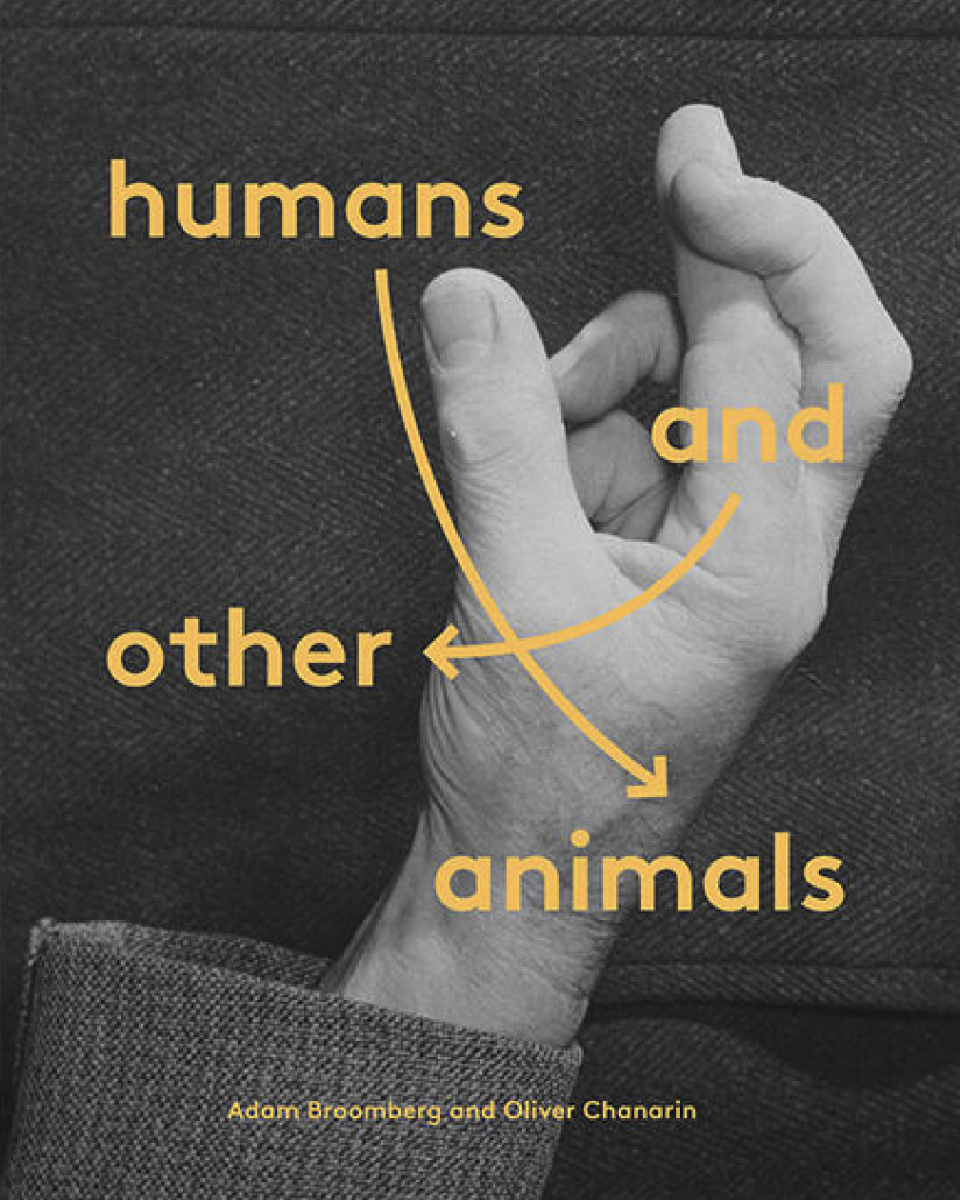
L is for Look presents a study of the children’s photobook, from its production and growth as a publishing phenomenon in the 1930s to the present day. The exhibition focuses on a body of nearly a hundred international works, highlighting original creative uses of photography, with the idea of not only showcasing its heritage and characteristic features, but also examining its contemporary manifestations. Women photographers play a key role in this publishing genre, which brings together two areas traditionally believed to be feminine: education and child portraiture, culminating in the creation of a specific genre in the 1970s that is involved in shaping the gaze of young readers.
Curation: Anne Lacoste, Scientific committee: Paul Cottin, Rose Durr, Florian Ebner, Anne Lacoste. Exhibition co-produced by the Institut pour la photographie des Hauts-de-France, Lille, which also acted as executive producer, and Photo Elysée, Lausanne, in collaboration with the Rencontres d’Arles.Publication: L is for Look, Spector Books, 2025.
19 May 2026
Anchor in the Landscape at Bienal de Coimbra
Anozero—Bienal de Coimbra presents its 2026 edition, To hold, to give, to receive, on view from April 11 through July 5, 2026, across multiple venues in Coimbra, Portugal.
Curated by Hans Ibelings and John Zeppetelli, with Daniel Madeira as assistant curator.
Participating artists include:
Chantal Akerman, Lina Bo Bardi, Taysir Batniji, Frédéric Bruly Bouabré, Adam Broomberg e/and Rafael Gonzalez, Thomas Demand, Forensic Architecture, and Nan Goldin.
https://anozerobienaldecoimbra.vercel.app/en
26 Mar 2026
Hyperallergic: When a Palestinian Artist Asserts Her Own Humanity
Basma al-Sharif’s screening at Kunstakademie Düsseldorf was met with threats and a smear campaign, proving the point of her films on separation and displacement. By Adam Broomberg & Michele Faguet 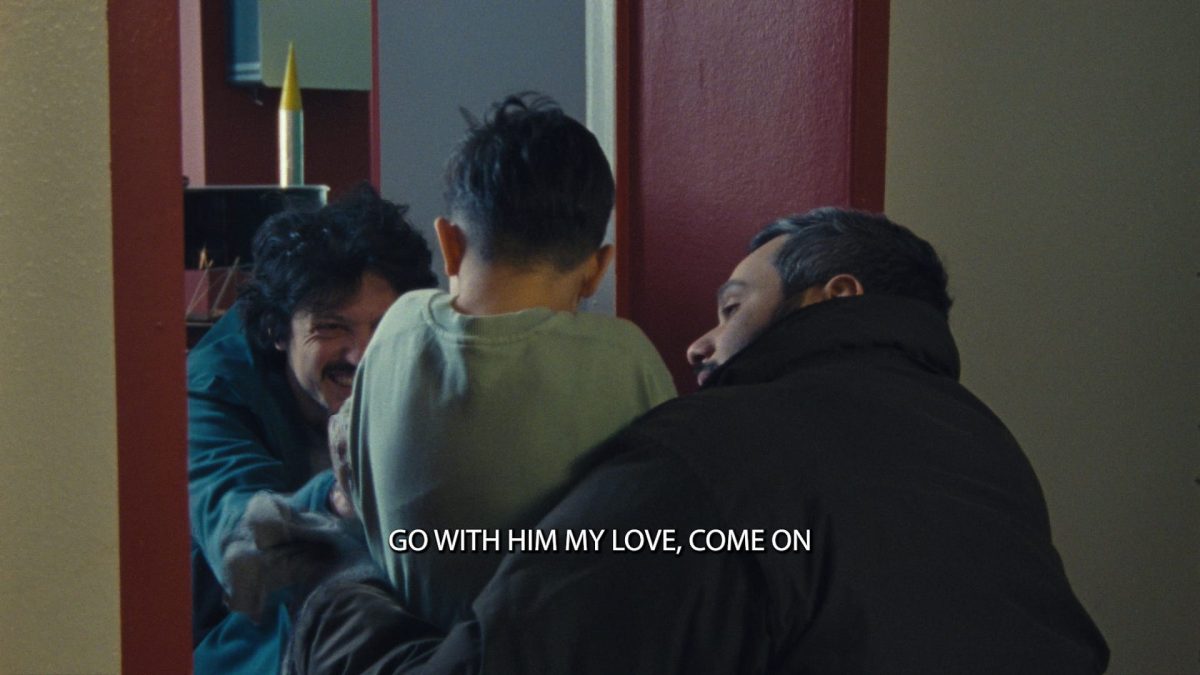
14 Feb 2026
Hyperallergic: Israel’s plans to artwash genocide at the Venice Biennale
The artwork at the heart of the pavilion promises to continue the project of denying Palestinian existence

09 Feb 2026
Contemporary Lynx: 11 photobooks from Paper Photo Festival 2025 to know.

The beauty of trees peeks through the photobook’s pages, as we can admire how magnificent and dignified trees can look. However, those photographed by Adam Broomberg (and Rafael Gonzalez) cannot be viewed from a purely aesthetic or even posthumanistic perspective.
These are olive trees photographed in Palestine – often hundreds or even thousands of years old. Although the olive branch is an ancient symbol of peace and harmony, these trees are the first thing that Israeli bulldozers remove as part of their process of colonisation – not only to eliminate income opportunities, but also to uproot Palestinian culture from this land.
Broomberg’s photobook is juxtaposed in the exhibition Rules of Repetition with Wojtek Wilczyk’s photobook There Is No Such Thing as Innocent Eye. In this Polish documentary project, Wilczyk presents the remnants of Jewish culture in Poland – places of worship converted into car repair shops, discos, residential houses, shops, and restaurants. It’s about the erasure of Jewish culture from the Polish imagination that takes on a whole new meaning when juxtaposed with Broomberg’s project.
Photobook, published by MACK, was presented as part of the Rules of Repetition exhibition.
31 Jan 2026
Lense Culture reviews “L is for Look”
Read the review

31 Jan 2026
BJP review of Chobi Mela
At Chobi Mela, photography’s contradictions are exposed and engaged with
31 Jan 2026
1000 Words: What we’re reading
What We’re Reading #6: Winter 2026
31 Jan 2026
Mamma perdono at MAR Ravenna
Mamma perdono
21 Jan 2026
Anchor in the Landscape at Chobi Mela XI
Chobi Mela XI 16-31st January 2026
Re
Now, more than half a year after Bangladesh rose in a people’s revolt,
we’ve realised a transformative possibility that resonates with the phonetic sound of ‘Re’.
‘Re’ symbolises collective imagination and the revival of dormant hopes.
We envision ‘rebuilding’ when disruptions signal new beginnings.
We also imagine ‘regeneration’ of a primordial future world, environmental healing, and rejuvenation.
More so, in response to human disturbances, we aim to restore damaged ecosystems, increase biodiversity,
enhance nature’s resilience, and remain defiant in the face of adversity.
The eleventh edition ‘re-imagines’ the euphony of ‘Re’.
16 Nov 2025
RADIO WEB MACBA: SON[I]A #441 ADAM BROOMBERG
SON[I]A #441 ADAM BROOMBERG

14 Nov 2025
Hyperallergic: The Irony of a Fascism Exhibition in Germany
Hyperallergic: The Irony of a Fascism Exhibition in Germany

11 Nov 2025
Panel Discussion – BDS as Resistance
With Adam Broomberg, Khaled El Mahmoud, Lucas Febraro and Georg Ismael
The occasion is our motion A19, submitted to the Berlin state party conference of The Left Party, which calls for the decriminalization of BDS and PACBI and the support of civil society campaigns against apartheid and occupation.
Inspired by the South African struggle against apartheid, Palestinian civil society calls for boycotts, divestments, and sanctions against Israel until it complies with international law and the universal principles of human rights. The BDS campaign provides information about national and global activities within the framework of the international BDS movement, which supports the 2005 call by Palestinian civil society.
04 Nov 2025
My People will return in air in water in light
My People will return in air in water in light

15 Oct 2025
PEI Obert open lecture series taking place at MACBA, Barcelona.
Bodies of Evidence. A lecture by Ido Nahari and Adam Broomberg for PEI Obert at MACBA

15 Sep 2025
Hyperallergic: The Twisted Logic of Documenta’s “Artistic Freedom”
Hyperallergic Opinion: The Twisted Logic of Documenta’s “Artistic Freedom”

22 Aug 2025
British Journal of Photography: In the Studio
In the studio: Adam Broomberg
10 Jul 2025
Ways of Unseeing by Adam Broomberg & Ido Nahari in A*Desk

Adam Broomberg and Ido Nahari’s examine how images of violence in Palestine have circulated and functioned in the past eighteen months. Examining photographs (including images from previous decades), evidence of war crimes, and the visual techniques of villainization, Broomberg and Nahari will address how these images both define the moral limits of violence and play an integral role in its enactment. Like modern warfare’s autonomous weaponry, its documentation also distances brutal cause from devastating effect. Vital to this discussion is the visibility of affliction—the war-torn bodies of damageable Palestinian victims vs. seemingly invulnerable Israeli soldiers—and how such optics sanctify certain forms of life while devaluing others wholesale.
Ways of Unseeing is the first of five chapters, published weekly in A*Desk
06 Jun 2025
Art Exchange Exhibition: Into the Woods
Into the Woods creates a platform for artists who question our relationship with the natural world around us.
Taking inspiration from poet and artist William Blake (1757 – 1827), it explores the powerful presence of nature in our lives – how a walk into the woods can connect us to the natural world, to a different scale in time and to something greater than ourselves.
Through exploring ancient traditions and speculating about the future, the artists in this show invite us to imagine our relationship with nature afresh – to envisage a countryside without land ownership, extraction or colonial practices – a place that inevitably re-wilds, and where non-human life forms can develop as the world flourishes when left to its own devices. In doing so, we find artists steadfastly returning the gaze of Western cultural norms as they offer a new way of seeing. As William Blake was well aware, the politics of this green and pleasant land are never far from the surface.
Into the Woods includes work by Larry Achiampong & David Blandy, Adam Broomberg, Rebecca Moss, Abigail Lane, Kenji Lim, Jevan Watkins Jones and Theo Panagopoulos.
30.05.2025 – 05.07.2025
06 Jun 2025
World Press Photo Talk: The stories that matter
The olive tree is a totem of Palestinian identity, culture, and resistance. It supports the livelihoods of more than 100,000 Palestinian families, is a centre of traditions and identities, and has long been a target of destruction and theft. Since 1967, 800,000 Palestinian olive trees have been destroyed by Israeli authorities and settlers. Over eighteen months, artists Adam Broomberg and Rafael Gonzalez travelled in the Occupied Territories of Palestine and photographed these trees, many of which are thousands of years old. Anchor in the Landscape brings together their studied, absorbing portraits, which act as fixed points in a historic and transforming landscape that is constantly disputed, altered, and increasingly destroyed. Each portrait bears witness to the presence and resilience of the Palestinian people and their relationship with the land. Adam Broomberg will talk about the potential of photography to reach people in an increasingly polarised and tribalised political and ideological landscape.
Saturday May 17th, Die Neuwe Kerk, Amsterdam 16:00
29 Apr 2025
IDEA 2025/26: PhMuseum’s Online Masterclass led by Adam Broomberg
For the first time I will be running an online masterclass offered by PhMuseum.
Find out about the course content and structure here
Find out about scholarships, costs and dates here

29 Apr 2025
Preface to Short-term, but long-term: A selection of images of IDF combatants sourced from dating apps
Short-Term, But Long-term 🥂
A selection of images of IDF combatants sourced from dating apps by Federico Vespignani (550bc, 2025)

Preface by Adam Broomberg and Ido Nahari.
First Edition
316 pages, 300 images with captions
Dimensions: 19 x 12 cm
29 Apr 2025
Spore Initiative presents ‘AʿMĀL AL-‘ARḌ
Curated by Jonathan Turner and Antonia Alampi
Following its first iteration as a Collateral Event to the 60th International Art Exhibition – La Biennale di Venezia, ‘aʿmāl al-‘arḍ – Landworks, Collective Action and Sound now unfolds in a new form, developed in conversation with Spore Initiative. Bringing together works produced by artists, collectives, and allies in and around the southern West Bank, the exhibition explores land, agriculture, and heritage as spaces of resilience, memory, and collective practice in a reality where access to these very foundations of life is constantly challenged.
The works exhibited are the result of artists residencies at Dar Jacir for Art and Research which houses multiple projects grounded in shared encounters and hospitality. Founded in 2014, Dar Jacir is an interdisciplinary experimental learning hub that fosters cross-cultural and intergenerational exchanges. A process and practice-oriented platform, it is devoted to educational, cultural, and agricultural exchanges and productions deeply rooted in Bethlehem.
The exhibition highlights how artistic practice becomes a form of persistence—engaging with land not only as a site of labour and sustenance but also as a space of cultural transmission, remembrance, and future-making. This iteration unfolds across three interwoven chapters. The first, Land, Memory, and the Rhythms of Survival,reflects on the endurance of place, exploring how artistic gestures—through movement, photography, and material archives—preserve histories, challenge erasures, and forge connections across generations. The second, Land, Nourishment, and the Politics of Care, focuses on agriculture, foraging, and food as acts of resistance, tracing how artists engage with seeds, soil, and shared rituals to sustain both community and identity. The final chapter, Absence, Sound, and the Politics of Visibility, considers what remains unseen—how sound, ephemeral traces, and overlooked details reveal the layers of restriction, adaptation, and presence in contested landscapes.
From the hands that plant and harvest to the bodies that dance and move, the works speak to the endurance of place, the interdependence of human and non-human rhythms, and the ways in which collectivity strengthens amid imposed fragmentation. Whether through preserving seeds, reviving generational techniques, mapping sonic environments, or enacting gestures of care, these practices insist on presence, continuity, and imagination. Through these works, ‘aʿmāl al-‘arḍ reflects the deep connections between agriculture, sound, movement, and storytelling, showing how tending to the land is not just about sustenance, but about survival, artistic practice, and the reaffirmation of belonging.
The audience is invited to listen and engage, to attune to the rhythms of work and care, to the gestures and voices that persist. To stand among these works is to stand within an ongoing conversation—one that grows, shifts, and carries forward, like roots threading through soil, even in the face of erasure.
15 Jan 2025
Talk at Base: Adam Broomberg and Rafael Gonzalez in conversation with Alessia Glaviano

Adam Broomberg and Rafael Gonzalez in conversation with Alessia Glaviano, Anchor in the Landscape (MACK, 2024)
Free entrance at BASE
MORE INFO
02 Dec 2024
Bard: Human Rights Project and Photography Program Present Bodies of Evidence
Thursday, November 14, 2024
Campus Center, Weis Cinema
4:00 pm – 5:30 pm EST/GMT-5
with Adam Broomberg and Ido Nahari
02 Dec 2024
NYU and Gallatin. Adam Broomberg: Anchor in the Landscape
More Info
22 Nov 2024
WATER LIKE TEARS, FLOUR LIKE SOIL Exhibition at ICD Brookfield Place with Dar Jacir for Art and Research

Exploring themes of land and cultural resistance, Water like tears, flour like soil is a group exhibition formed in partnership between ICD Brookfield Place Arts and Dar Jacir for Art and Research. This project is part of the ICD Brookfield Place Arts Program, which explores ways of supporting regional creatives and the UAE’s cultural landscape through year-round programming and exhibitions. Water like tears, flour like soil hosts collaborators from Dar Jacir to explore ways in which collective narratives and storytelling connect across time, lineage, and landscapes.
More Info
19 Nov 2024
Artist Fundraiser for MSF

More Info
06 Nov 2024
13 November: Anchor in the Landscape book Launch and conversation with Adam Broomberg & Issa Amro at Printed Matter

Conversation between artist, activist and educator Adam Broomberg and activist Issa Amro as they discuss Broomberg and Rafael Gonzalez’s jointly-authored book, Anchor in the Landscape.
More Info
06 Nov 2024
09 November: Anchor in the Landscape book launch at LeBal with Adam Broomberg & Rafael Gonzalez

In occasion of Paris photo event, the BAL Bookshop is inviting Adam Broomberg, Rafael Gonzalez & Barbara Debeuckelaere for a crossroads meeting, on their books Anchor in the landscape and ‘Om mother, published by MACK and Eriskay connection. The artists will be acompanied by the virtual presence of Issa Amro, Palestinian human rights defender, from the city of Hebron.
More Info
22 Oct 2024
[PARIS PHOTO] : ADAM BROOMBERG, RAFAEL GONZALEZ & BARBARA DEBEUCKLAERE
ADAM BROOMBERG, RAFAEL GONZALEZ & BARBARA DEBEUCKLAERE SERONT RÉUNIS LE SAMEDI 9 NOVEMBRE À 19H, POUR UNE RENCONTRE CROISÉE AUTOUR DE LEURS LIVRES RESPECTIFS ANCHOR IN THE LANSCAPE ET ‘OM MOTHER, AUX ÉDITIONS MACK ET ERISKAY CONNECTION.
More Info
16 Oct 2024
BOOK LAUNCH AND CONVERSATION: ANCHOR IN THE LANDSCAPE

THU 17 OCT 2024, 6.30-8.30PM
South London Gallery
More Info
16 Oct 2024
EXHIBITION: SILENT TIMES

26.10.24 — 30.03.25
Curated by Joachim Naudts
Participating artists Basir Mahmood, Adam Broomberg & Rafael Gonzalez, Taysir Batniji, Younes Zarhoni
More Info
16 Oct 2024
Mail Guardian: Powerful images of ancient trees show Palestinians’ loss
Read Here
16 Oct 2024
Activism in the Landscape: Environmental Arts & Resistance in Palestine

Read Here
19 Sep 2024
Si Fest: Adam Broomberg & Oliver Chanarin | Chicago

Chicago è una città artificiale nel deserto del Negev, costruita dal governo israeliano per addestrare l’esercito al combattimento urbano. Una scenografia disabitata, costruita come quelle palestinesi di Ramallah e Nablus, con finti graffiti in arabo sui muri, carcasse di automobili per la strada, moschee e campi profughi. A Chicago tutto, anche un cartone di latte al supermercato, può essere l’ordigno per un attentato: un non luogo grottesco, estremamente efficace per descrivere diffidenza, pregiudizio e il sentire degli israeliani nei confronti dei palestinesi. Il progetto è una riflessione sul tema della costruzione – reale e simbolica – di un territorio, espressione della condizione di violenza e insicurezza originate dalla irrisolta questione dei territori nel rapporto Israele-Palestina. Con questo ciclo fotografico del 2006-2007, gli autori si interrogano sul valore della fotografia in rapporto ai conflitti contemporanei: in una società ormai satura di immagini in cui il fotoreportage ha perso gran parte del significato originario, superato da tecnologia e ragioni della politica, questa riflessione si rivela ancor più attuale oggi, dopo il 7 ottobre 2023. Un lavoro che, a quasi vent’anni dalla sua pubblicazione, rivela tutta la sua amara attualità.
Adam Broomberg (Johannesburg, Sud Africa, 1970) e Oliver Chanarin (Londra, UK, 1971) vivono e lavorano tra Londra e Berlino. Professori di fotografia alla Hochschule für Bildende Künste (HFBK) di Amburgo e alla Royal Academy of Art (KABK) dell’Aia, il loro lavoro è in importanti collezioni internazionali pubbliche e private tra cui Pompidou, Tate, MoMA, Yale, Stedelijk, V&A, Art Gallery of Ontario, Cleveland Museum of Art e Baltimore Museum of Art. Tra i premi più importanti lo ICP Infinity Award (2014), il Deutsche Börse Photography Prize (2013), l’Arles Photo Text Award (2018). Nel 2021 hanno cessato la collaborazione.
10 Sep 2024
Le Monde: L’olivier, symbole malmené en terre occupée

Depuis 1967 et l’occupation par Israël de la Cisjordanie, des milliers d’oliviers ont été détruits par les autorités ou les colons israéliens. Entre 2022 et 2023, les photographes Adam Broomberg et Rafael Gonzalez ont immortalisé les arbres encore debout, pour certains millénaires, emblèmes de l’enracinement palestinien dans ces territoires.
Since 1967 and Israel’s occupation of the West Bank, thousands of olive trees have been destroyed by Israeli authorities or settlers. Between 2022 and 2023, photographers Adam Broomberg and Rafael Gonzalez immortalized the trees still standing, for some millennials, emblems of Palestinian rootedness in these territories.
Le Monde
Le Monde PDF
09 Jul 2024
Adam Broomberg, Rafael Gonzalez and Issa Amro in conversation at BulBul Berlin

Adam Broomberg and Rafael Gonzalez will be in conversation with Issa Amro to mark the launch of Anchor in the Landscape, a book that brings together studied, absorbing portraits of olive trees in Palestine which act as fixed points in a historic and transforming landscape that is constantly disputed, altered, and destroyed.
Wednesday 10 July
18:00 CEST
BulBul Berlin
Skalitzer Str. 114
10999 Berlin
Free
Registration on the door
03 Jul 2024
“Io, fotografo ebreo, perseguitato perché sto con i palestinesi”: intervista ad Adam Broomberg

L’Indipendente
03 Jul 2024
‘OM/Mother (2023), published by The Eriskay Connection, with photos and texts by Hebron mothers + me and a text by Adam Broomberg, is nominated for the Book Award 2024!

More Info
03 Jul 2024
With Issa Amro, Adam Rouhana, Barbara Debeuckelaere, Rafael Gonzalez we talk Palestine, resistance and art/photography. On 4th of July at 11 am. In Arles, Doubledummy studio

With @issaamro, @adam.rouhana, @barbaradebeuckelaere, @rafael__gonzalez__ we talk Palestine, resistance and art/photography. On 4th of July at 11 am. In Arles, @doubledummy.studio
More Info
03 Jul 2024
Adam Broomberg and Rafael Gonzalez: Anchor in the Landscape book signing with TIPI PHOTO BOOKSHOP in Arles on 5th of July at 18:30

We are happy to announce the book signing with TIPI PHOTO BOOKSHOP in Arles on 5th of July at 18:30!
More Info
07 Jun 2024
Upcoming exhibition: ABSENCED. Malmo City Library

Exhibition info
04 Jun 2024
The 25 Photos That Defined the Modern Age

The New York Times
23 Apr 2024
Our show is now open

OUR SHOW IS NOW OPEN!
We are so honoured to be a part of of the 60th International Art Exhibition – La
Biennale di Venezia
Elephant
ArtNet
HypeBeast
The Guardian
ArtNet
TheArtNewspaper
Elephant
ArtNews
The Guardian
Ocula
Middle East Monitor
British Journal of Photography
Dawn
ContemporaryAnd
Artvisor
Los Angeles Review of Books
11 Apr 2024
Anchor in the Landscape
The book on Mack’s website
11 Apr 2024
AAH at la Biennale di Venezia
https://universes.art/en/venice-biennale/2024/south-west-bank
15 Jan 2024
“Ich mache mir Sorgen um meine Sicherheit in Deutschland”
Read more on zeit.de
Hundreds of Artists Say They Won’t Show at German Institutions with ‘McCarthyist Policies’ on Palestine
Read more on artnews.com
Watch on youtube.com
12 Jan 2024
Artists Pledge to Boycott German Institutions Over Stifling of Pro-Palestine Speech
Hundreds of cultural figures have decried the nation’s “McCarthyist policies” equating criticism of the Israeli government with antisemitism.
Read more hear
24 Nov 2023
Where Were Your Grandparents During the War? (with Adam Broomberg)
The Alexei Sayle Podcast
Adam Broomberg returns! The South African, Jewish artist updates us on his journey as a Palestine activist living in Germany, we discuss the censorship of anti-zionism in Germany and we also check in with ourselves and explore how this is impacting us all emotionally.
Listen here
09 Jul 2026
Arles 2026: L is for Look The Children’s Photobook at Espace Van Gogh
L is for Look presents a study of the children’s photobook, from its production and growth as a publishing phenomenon in the 1930s to the present day. The exhibition focuses on a body of nearly a hundred international works, highlighting original creative uses of photography, with the idea of not only showcasing its heritage and characteristic features, but also examining its contemporary manifestations. Women photographers play a key role in this publishing genre, which brings together two areas traditionally believed to be feminine: education and child portraiture, culminating in the creation of a specific genre in the 1970s that is involved in shaping the gaze of young readers.
Curation: Anne Lacoste, Scientific committee: Paul Cottin, Rose Durr, Florian Ebner, Anne Lacoste. Exhibition co-produced by the Institut pour la photographie des Hauts-de-France, Lille, which also acted as executive producer, and Photo Elysée, Lausanne, in collaboration with the Rencontres d’Arles.Publication: L is for Look, Spector Books, 2025.
19 May 2026
Anchor in the Landscape at Bienal de Coimbra
Anozero—Bienal de Coimbra presents its 2026 edition, To hold, to give, to receive, on view from April 11 through July 5, 2026, across multiple venues in Coimbra, Portugal.
Curated by Hans Ibelings and John Zeppetelli, with Daniel Madeira as assistant curator.
Participating artists include:
Chantal Akerman, Lina Bo Bardi, Taysir Batniji, Frédéric Bruly Bouabré, Adam Broomberg e/and Rafael Gonzalez, Thomas Demand, Forensic Architecture, and Nan Goldin.
https://anozerobienaldecoimbra.vercel.app/en
26 Mar 2026
Hyperallergic: When a Palestinian Artist Asserts Her Own Humanity
Basma al-Sharif’s screening at Kunstakademie Düsseldorf was met with threats and a smear campaign, proving the point of her films on separation and displacement. By Adam Broomberg & Michele Faguet
14 Feb 2026
Hyperallergic: Israel’s plans to artwash genocide at the Venice Biennale
The artwork at the heart of the pavilion promises to continue the project of denying Palestinian existence
09 Feb 2026
Contemporary Lynx: 11 photobooks from Paper Photo Festival 2025 to know.
The beauty of trees peeks through the photobook’s pages, as we can admire how magnificent and dignified trees can look. However, those photographed by Adam Broomberg (and Rafael Gonzalez) cannot be viewed from a purely aesthetic or even posthumanistic perspective.
These are olive trees photographed in Palestine – often hundreds or even thousands of years old. Although the olive branch is an ancient symbol of peace and harmony, these trees are the first thing that Israeli bulldozers remove as part of their process of colonisation – not only to eliminate income opportunities, but also to uproot Palestinian culture from this land.
Broomberg’s photobook is juxtaposed in the exhibition Rules of Repetition with Wojtek Wilczyk’s photobook There Is No Such Thing as Innocent Eye. In this Polish documentary project, Wilczyk presents the remnants of Jewish culture in Poland – places of worship converted into car repair shops, discos, residential houses, shops, and restaurants. It’s about the erasure of Jewish culture from the Polish imagination that takes on a whole new meaning when juxtaposed with Broomberg’s project.
Photobook, published by MACK, was presented as part of the Rules of Repetition exhibition.
31 Jan 2026
Lense Culture reviews “L is for Look”
Read the review
31 Jan 2026
BJP review of Chobi Mela
At Chobi Mela, photography’s contradictions are exposed and engaged with
31 Jan 2026
1000 Words: What we’re reading
What We’re Reading #6: Winter 2026
31 Jan 2026
Mamma perdono at MAR Ravenna
Mamma perdono
21 Jan 2026
Anchor in the Landscape at Chobi Mela XI
Chobi Mela XI 16-31st January 2026
Re
Now, more than half a year after Bangladesh rose in a people’s revolt,
we’ve realised a transformative possibility that resonates with the phonetic sound of ‘Re’.
‘Re’ symbolises collective imagination and the revival of dormant hopes.
We envision ‘rebuilding’ when disruptions signal new beginnings.
We also imagine ‘regeneration’ of a primordial future world, environmental healing, and rejuvenation.
More so, in response to human disturbances, we aim to restore damaged ecosystems, increase biodiversity,
enhance nature’s resilience, and remain defiant in the face of adversity.
The eleventh edition ‘re-imagines’ the euphony of ‘Re’.
16 Nov 2025
RADIO WEB MACBA: SON[I]A #441 ADAM BROOMBERG
SON[I]A #441 ADAM BROOMBERG
14 Nov 2025
Hyperallergic: The Irony of a Fascism Exhibition in Germany
Hyperallergic: The Irony of a Fascism Exhibition in Germany
11 Nov 2025
Panel Discussion – BDS as Resistance
With Adam Broomberg, Khaled El Mahmoud, Lucas Febraro and Georg Ismael
The occasion is our motion A19, submitted to the Berlin state party conference of The Left Party, which calls for the decriminalization of BDS and PACBI and the support of civil society campaigns against apartheid and occupation.
Inspired by the South African struggle against apartheid, Palestinian civil society calls for boycotts, divestments, and sanctions against Israel until it complies with international law and the universal principles of human rights. The BDS campaign provides information about national and global activities within the framework of the international BDS movement, which supports the 2005 call by Palestinian civil society.
04 Nov 2025
My People will return in air in water in light
My People will return in air in water in light
15 Oct 2025
PEI Obert open lecture series taking place at MACBA, Barcelona.
Bodies of Evidence. A lecture by Ido Nahari and Adam Broomberg for PEI Obert at MACBA
15 Sep 2025
Hyperallergic: The Twisted Logic of Documenta’s “Artistic Freedom”
Hyperallergic Opinion: The Twisted Logic of Documenta’s “Artistic Freedom”
22 Aug 2025
British Journal of Photography: In the Studio
In the studio: Adam Broomberg
10 Jul 2025
Ways of Unseeing by Adam Broomberg & Ido Nahari in A*Desk
Adam Broomberg and Ido Nahari’s examine how images of violence in Palestine have circulated and functioned in the past eighteen months. Examining photographs (including images from previous decades), evidence of war crimes, and the visual techniques of villainization, Broomberg and Nahari will address how these images both define the moral limits of violence and play an integral role in its enactment. Like modern warfare’s autonomous weaponry, its documentation also distances brutal cause from devastating effect. Vital to this discussion is the visibility of affliction—the war-torn bodies of damageable Palestinian victims vs. seemingly invulnerable Israeli soldiers—and how such optics sanctify certain forms of life while devaluing others wholesale.
Ways of Unseeing is the first of five chapters, published weekly in A*Desk
06 Jun 2025
Art Exchange Exhibition: Into the Woods
Into the Woods creates a platform for artists who question our relationship with the natural world around us.
Taking inspiration from poet and artist William Blake (1757 – 1827), it explores the powerful presence of nature in our lives – how a walk into the woods can connect us to the natural world, to a different scale in time and to something greater than ourselves.
Through exploring ancient traditions and speculating about the future, the artists in this show invite us to imagine our relationship with nature afresh – to envisage a countryside without land ownership, extraction or colonial practices – a place that inevitably re-wilds, and where non-human life forms can develop as the world flourishes when left to its own devices. In doing so, we find artists steadfastly returning the gaze of Western cultural norms as they offer a new way of seeing. As William Blake was well aware, the politics of this green and pleasant land are never far from the surface.
Into the Woods includes work by Larry Achiampong & David Blandy, Adam Broomberg, Rebecca Moss, Abigail Lane, Kenji Lim, Jevan Watkins Jones and Theo Panagopoulos.
30.05.2025 – 05.07.2025
06 Jun 2025
World Press Photo Talk: The stories that matter
The olive tree is a totem of Palestinian identity, culture, and resistance. It supports the livelihoods of more than 100,000 Palestinian families, is a centre of traditions and identities, and has long been a target of destruction and theft. Since 1967, 800,000 Palestinian olive trees have been destroyed by Israeli authorities and settlers. Over eighteen months, artists Adam Broomberg and Rafael Gonzalez travelled in the Occupied Territories of Palestine and photographed these trees, many of which are thousands of years old. Anchor in the Landscape brings together their studied, absorbing portraits, which act as fixed points in a historic and transforming landscape that is constantly disputed, altered, and increasingly destroyed. Each portrait bears witness to the presence and resilience of the Palestinian people and their relationship with the land. Adam Broomberg will talk about the potential of photography to reach people in an increasingly polarised and tribalised political and ideological landscape.
Saturday May 17th, Die Neuwe Kerk, Amsterdam 16:00
29 Apr 2025
IDEA 2025/26: PhMuseum’s Online Masterclass led by Adam Broomberg
For the first time I will be running an online masterclass offered by PhMuseum.
Find out about the course content and structure here
Find out about scholarships, costs and dates here
29 Apr 2025
Preface to Short-term, but long-term: A selection of images of IDF combatants sourced from dating apps
Short-Term, But Long-term 🥂
A selection of images of IDF combatants sourced from dating apps by Federico Vespignani (550bc, 2025)
Preface by Adam Broomberg and Ido Nahari.
First Edition
316 pages, 300 images with captions
Dimensions: 19 x 12 cm
29 Apr 2025
Spore Initiative presents ‘AʿMĀL AL-‘ARḌ
Curated by Jonathan Turner and Antonia Alampi
Following its first iteration as a Collateral Event to the 60th International Art Exhibition – La Biennale di Venezia, ‘aʿmāl al-‘arḍ – Landworks, Collective Action and Sound now unfolds in a new form, developed in conversation with Spore Initiative. Bringing together works produced by artists, collectives, and allies in and around the southern West Bank, the exhibition explores land, agriculture, and heritage as spaces of resilience, memory, and collective practice in a reality where access to these very foundations of life is constantly challenged.
The works exhibited are the result of artists residencies at Dar Jacir for Art and Research which houses multiple projects grounded in shared encounters and hospitality. Founded in 2014, Dar Jacir is an interdisciplinary experimental learning hub that fosters cross-cultural and intergenerational exchanges. A process and practice-oriented platform, it is devoted to educational, cultural, and agricultural exchanges and productions deeply rooted in Bethlehem.
The exhibition highlights how artistic practice becomes a form of persistence—engaging with land not only as a site of labour and sustenance but also as a space of cultural transmission, remembrance, and future-making. This iteration unfolds across three interwoven chapters. The first, Land, Memory, and the Rhythms of Survival,reflects on the endurance of place, exploring how artistic gestures—through movement, photography, and material archives—preserve histories, challenge erasures, and forge connections across generations. The second, Land, Nourishment, and the Politics of Care, focuses on agriculture, foraging, and food as acts of resistance, tracing how artists engage with seeds, soil, and shared rituals to sustain both community and identity. The final chapter, Absence, Sound, and the Politics of Visibility, considers what remains unseen—how sound, ephemeral traces, and overlooked details reveal the layers of restriction, adaptation, and presence in contested landscapes.
From the hands that plant and harvest to the bodies that dance and move, the works speak to the endurance of place, the interdependence of human and non-human rhythms, and the ways in which collectivity strengthens amid imposed fragmentation. Whether through preserving seeds, reviving generational techniques, mapping sonic environments, or enacting gestures of care, these practices insist on presence, continuity, and imagination. Through these works, ‘aʿmāl al-‘arḍ reflects the deep connections between agriculture, sound, movement, and storytelling, showing how tending to the land is not just about sustenance, but about survival, artistic practice, and the reaffirmation of belonging.
The audience is invited to listen and engage, to attune to the rhythms of work and care, to the gestures and voices that persist. To stand among these works is to stand within an ongoing conversation—one that grows, shifts, and carries forward, like roots threading through soil, even in the face of erasure.
15 Jan 2025
Talk at Base: Adam Broomberg and Rafael Gonzalez in conversation with Alessia Glaviano
Adam Broomberg and Rafael Gonzalez in conversation with Alessia Glaviano, Anchor in the Landscape (MACK, 2024)
Free entrance at BASE
MORE INFO
02 Dec 2024
Bard: Human Rights Project and Photography Program Present Bodies of Evidence
Thursday, November 14, 2024
Campus Center, Weis Cinema
4:00 pm – 5:30 pm EST/GMT-5
with Adam Broomberg and Ido Nahari
02 Dec 2024
NYU and Gallatin. Adam Broomberg: Anchor in the Landscape
More Info
22 Nov 2024
WATER LIKE TEARS, FLOUR LIKE SOIL Exhibition at ICD Brookfield Place with Dar Jacir for Art and Research
Exploring themes of land and cultural resistance, Water like tears, flour like soil is a group exhibition formed in partnership between ICD Brookfield Place Arts and Dar Jacir for Art and Research. This project is part of the ICD Brookfield Place Arts Program, which explores ways of supporting regional creatives and the UAE’s cultural landscape through year-round programming and exhibitions. Water like tears, flour like soil hosts collaborators from Dar Jacir to explore ways in which collective narratives and storytelling connect across time, lineage, and landscapes.
More Info
19 Nov 2024
Artist Fundraiser for MSF
More Info
06 Nov 2024
13 November: Anchor in the Landscape book Launch and conversation with Adam Broomberg & Issa Amro at Printed Matter
Conversation between artist, activist and educator Adam Broomberg and activist Issa Amro as they discuss Broomberg and Rafael Gonzalez’s jointly-authored book, Anchor in the Landscape.
More Info
06 Nov 2024
09 November: Anchor in the Landscape book launch at LeBal with Adam Broomberg & Rafael Gonzalez
In occasion of Paris photo event, the BAL Bookshop is inviting Adam Broomberg, Rafael Gonzalez & Barbara Debeuckelaere for a crossroads meeting, on their books Anchor in the landscape and ‘Om mother, published by MACK and Eriskay connection. The artists will be acompanied by the virtual presence of Issa Amro, Palestinian human rights defender, from the city of Hebron.
More Info
22 Oct 2024
[PARIS PHOTO] : ADAM BROOMBERG, RAFAEL GONZALEZ & BARBARA DEBEUCKLAERE
ADAM BROOMBERG, RAFAEL GONZALEZ & BARBARA DEBEUCKLAERE SERONT RÉUNIS LE SAMEDI 9 NOVEMBRE À 19H, POUR UNE RENCONTRE CROISÉE AUTOUR DE LEURS LIVRES RESPECTIFS ANCHOR IN THE LANSCAPE ET ‘OM MOTHER, AUX ÉDITIONS MACK ET ERISKAY CONNECTION.
More Info
16 Oct 2024
BOOK LAUNCH AND CONVERSATION: ANCHOR IN THE LANDSCAPE
THU 17 OCT 2024, 6.30-8.30PM
South London Gallery
More Info
16 Oct 2024
EXHIBITION: SILENT TIMES
26.10.24 — 30.03.25
Curated by Joachim Naudts
Participating artists Basir Mahmood, Adam Broomberg & Rafael Gonzalez, Taysir Batniji, Younes Zarhoni
More Info
16 Oct 2024
Mail Guardian: Powerful images of ancient trees show Palestinians’ loss
Read Here
16 Oct 2024
Activism in the Landscape: Environmental Arts & Resistance in Palestine
Read Here
19 Sep 2024
Si Fest: Adam Broomberg & Oliver Chanarin | Chicago
Chicago è una città artificiale nel deserto del Negev, costruita dal governo israeliano per addestrare l’esercito al combattimento urbano. Una scenografia disabitata, costruita come quelle palestinesi di Ramallah e Nablus, con finti graffiti in arabo sui muri, carcasse di automobili per la strada, moschee e campi profughi. A Chicago tutto, anche un cartone di latte al supermercato, può essere l’ordigno per un attentato: un non luogo grottesco, estremamente efficace per descrivere diffidenza, pregiudizio e il sentire degli israeliani nei confronti dei palestinesi. Il progetto è una riflessione sul tema della costruzione – reale e simbolica – di un territorio, espressione della condizione di violenza e insicurezza originate dalla irrisolta questione dei territori nel rapporto Israele-Palestina. Con questo ciclo fotografico del 2006-2007, gli autori si interrogano sul valore della fotografia in rapporto ai conflitti contemporanei: in una società ormai satura di immagini in cui il fotoreportage ha perso gran parte del significato originario, superato da tecnologia e ragioni della politica, questa riflessione si rivela ancor più attuale oggi, dopo il 7 ottobre 2023. Un lavoro che, a quasi vent’anni dalla sua pubblicazione, rivela tutta la sua amara attualità.
Adam Broomberg (Johannesburg, Sud Africa, 1970) e Oliver Chanarin (Londra, UK, 1971) vivono e lavorano tra Londra e Berlino. Professori di fotografia alla Hochschule für Bildende Künste (HFBK) di Amburgo e alla Royal Academy of Art (KABK) dell’Aia, il loro lavoro è in importanti collezioni internazionali pubbliche e private tra cui Pompidou, Tate, MoMA, Yale, Stedelijk, V&A, Art Gallery of Ontario, Cleveland Museum of Art e Baltimore Museum of Art. Tra i premi più importanti lo ICP Infinity Award (2014), il Deutsche Börse Photography Prize (2013), l’Arles Photo Text Award (2018). Nel 2021 hanno cessato la collaborazione.
10 Sep 2024
Le Monde: L’olivier, symbole malmené en terre occupée
Depuis 1967 et l’occupation par Israël de la Cisjordanie, des milliers d’oliviers ont été détruits par les autorités ou les colons israéliens. Entre 2022 et 2023, les photographes Adam Broomberg et Rafael Gonzalez ont immortalisé les arbres encore debout, pour certains millénaires, emblèmes de l’enracinement palestinien dans ces territoires.
Since 1967 and Israel’s occupation of the West Bank, thousands of olive trees have been destroyed by Israeli authorities or settlers. Between 2022 and 2023, photographers Adam Broomberg and Rafael Gonzalez immortalized the trees still standing, for some millennials, emblems of Palestinian rootedness in these territories.
Le Monde
Le Monde PDF
09 Jul 2024
Adam Broomberg, Rafael Gonzalez and Issa Amro in conversation at BulBul Berlin
Adam Broomberg and Rafael Gonzalez will be in conversation with Issa Amro to mark the launch of Anchor in the Landscape, a book that brings together studied, absorbing portraits of olive trees in Palestine which act as fixed points in a historic and transforming landscape that is constantly disputed, altered, and destroyed.
Wednesday 10 July
18:00 CEST
BulBul Berlin
Skalitzer Str. 114
10999 Berlin
Free
Registration on the door
03 Jul 2024
“Io, fotografo ebreo, perseguitato perché sto con i palestinesi”: intervista ad Adam Broomberg
L’Indipendente
03 Jul 2024
‘OM/Mother (2023), published by The Eriskay Connection, with photos and texts by Hebron mothers + me and a text by Adam Broomberg, is nominated for the Book Award 2024!
More Info
03 Jul 2024
With Issa Amro, Adam Rouhana, Barbara Debeuckelaere, Rafael Gonzalez we talk Palestine, resistance and art/photography. On 4th of July at 11 am. In Arles, Doubledummy studio
With @issaamro, @adam.rouhana, @barbaradebeuckelaere, @rafael__gonzalez__ we talk Palestine, resistance and art/photography. On 4th of July at 11 am. In Arles, @doubledummy.studio
More Info
03 Jul 2024
Adam Broomberg and Rafael Gonzalez: Anchor in the Landscape book signing with TIPI PHOTO BOOKSHOP in Arles on 5th of July at 18:30
We are happy to announce the book signing with TIPI PHOTO BOOKSHOP in Arles on 5th of July at 18:30!
More Info
07 Jun 2024
Upcoming exhibition: ABSENCED. Malmo City Library
Exhibition info
04 Jun 2024
The 25 Photos That Defined the Modern Age
The New York Times
23 Apr 2024
Our show is now open
OUR SHOW IS NOW OPEN!
We are so honoured to be a part of of the 60th International Art Exhibition – La
Biennale di Venezia
Elephant
ArtNet
HypeBeast
The Guardian
ArtNet
TheArtNewspaper
Elephant
ArtNews
The Guardian
Ocula
Middle East Monitor
British Journal of Photography
Dawn
ContemporaryAnd
Artvisor
Los Angeles Review of Books
11 Apr 2024
Anchor in the Landscape
The book on Mack’s website
11 Apr 2024
AAH at la Biennale di Venezia
https://universes.art/en/venice-biennale/2024/south-west-bank
15 Jan 2024
“Ich mache mir Sorgen um meine Sicherheit in Deutschland”
Read more on zeit.de
Hundreds of Artists Say They Won’t Show at German Institutions with ‘McCarthyist Policies’ on Palestine
Read more on artnews.com
Watch on youtube.com
12 Jan 2024
Artists Pledge to Boycott German Institutions Over Stifling of Pro-Palestine Speech
Hundreds of cultural figures have decried the nation’s “McCarthyist policies” equating criticism of the Israeli government with antisemitism.
Read more hear
24 Nov 2023
Where Were Your Grandparents During the War? (with Adam Broomberg)
The Alexei Sayle Podcast
Adam Broomberg returns! The South African, Jewish artist updates us on his journey as a Palestine activist living in Germany, we discuss the censorship of anti-zionism in Germany and we also check in with ourselves and explore how this is impacting us all emotionally.
Listen here
